看免费影视网 看免费影视网
游客
海报背景
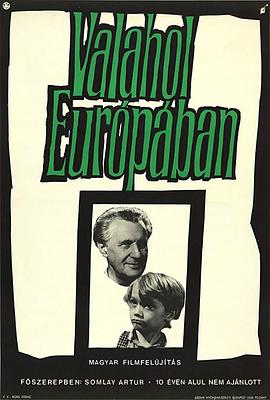
欧洲的某个地方海报图片

欧洲的某个地方

备注 :DVD
更新 :2026-02-18 02:05:19
1948·其它·剧情 ·其它·
立即播放
收藏
4.0
网友评分
  • 很差
  • 较差
  • 还行
  • 推荐
  • 力荐
559次评分
  • 很差
  • 较差
  • 还行
  • 推荐
  • 力荐
扫描观看

扫描一扫app播放

  Somewhere in the remote region, the war ends. In the midst of ruined cities and houses in the streets, in rural hamlets, everywhere where people still live, are children who have lost their homes and parents. Abandoned, hungry, and in rags, defenseless and humiliated, they wander through the world. Hunger drives them. Little streams of orphans merge into a river which rushes forward and submerges everything in its path. The children do not know any feeling they know only the world of their enemies. They fight, steal, struggle for a mouthful of food, and violence is merely a means to get it. A gang led by Cahoun finds a refuge in an abandoned castle and encounters an old composer who has voluntarily retired into solitude from a world of hatred, treason, and crime. How can they find a common ground, how can they become mutual friends? The castle becomes their hiding place but possibly it will also be their first home which they may organize and must defend. But even for this, the price will be very high.  To this simple story, the journalist, writer, poet, scriptwriter, movie director, and film theoretician Béla Balázs applied many years of experience. He and the director Géza Radványi created a work which opened a new postwar chapter in Hungarian film. Surprisingly, this film has not lost any of its impact over the years, especially on a profound philosophical level. That is to say, it is not merely a movie about war it is not important in what location and in what period of time it takes place. It is a story outside of time about the joyless fate of children who pay dearly for the cruel war games of adults.  At the time it was premiered, the movie was enthusiastically received by the critics. The main roles were taken by streetwise boys of a children's group who created their roles improvisationally in close contact with a few professional actors, and in the children's acting their own fresh experience of war's turmoil appears to be reflected. At the same time, their performance fits admirably into the mosaic of a very complex movie language. Balázs's influence revealed itself, above all, in the introductory sequences: an air raid on an amusement park, seen in a montage of dramatic situations evoking the last spasms of war, where, undoubtedly, we discern the influence of classical Soviet cinematography. Shooting, the boy's escape, the locomotive's wheels, the shadows of soldiers with submachine guns, the sound of a whistle—the images are linked together in abrupt sequences in which varying shots and expressive sharp sounds are emphasized. A perfectly planned screenplay avoided all elements of sentimentality, time-worn stereotypes of wronged children, romanticism and cheap simplification. The authors succeeded in bridging the perilous dramatic abyss of the metamorphosis of a children's community. Their telling of the story (the scene of pillaging, the assault on the castle, etc) independently introduced some neorealist elements which, at that time, were being propagated in Italy by De Sica, Rossellini, and other film artists. The rebukes of contemporary critics, who called attention to "formalism for its own sake" have been forgotten. The masterly art of cameraman Barnabás Hegyi gives vitality to the poetic images. His angle shots of the children, his composition of scenes in the castle interior, are a living document of the times, and underline the atmosphere and the characters of the protagonists. The success of the picture was also enhanced by the musical art of composer Dénes Buday who, in tense situations, inserted the theme of the Marseilaise into the movie's structure, as a motive of community unification, as an expression of friendship and the possibility of understanding.  Valahol Europaban is the first significant postwar Hungarian film. It originated in a relaxed atmosphere, replete with joy and euphoria, and it includes these elements in order to demonstrate the strength of humanism, tolerance, and friendship. It represents a general condemnation of war anywhere in the world, in any form.
展开

无模块

资源列表

排序

相关明星

相关明显

更多

相关影片

更多
浴火之森
贝伦·奎斯塔,戴安娜·戈麦斯,恩里克·奥克尔,华金·弗里尔
寻秦记2025
古天乐,林峯,宣萱,郭羡妮,滕丽名,白百何,苗侨伟,张继聪,朱鉴然,吴樾,洪天明,高战,邓一君,廖启智,欧瑞伟,陈国邦,黄文标,蔡一智,廖子妤,郑雪儿,徐伟栋,洪天照
寻秦记2025
古天乐,林峯,宣萱,郭羡妮,滕丽名,白百何,苗侨伟,张继聪,朱鉴然,吴樾,洪天明,高战,邓一君,廖启智,欧瑞伟,陈国邦,黄文标,蔡一智,廖子妤,郑雪儿,徐伟栋,洪天照
不被爱也没关系
南沙良,马场富美加,本田望结,基俊介,河井青叶,伊岛空,池津祥子
奶奶2023
“奶奶”(导演自幼将外婆误称为奶奶)离世后,导演彩玲开始与她的旧识亲友见面——“奶奶”最好的朋友和弟弟,以及彩玲的奶奶。旅程中,导演探访了哥斯达黎加的不同地区,一窥华人社群的风貌,并在邂逅的人物与已故
熊猫计划之部落奇遇记
成龙,马丽,乔杉,于洋,王影璐,张子栋,王成思,柯达,宋木子,冯满,王星,潘斌龙,于荣光,胡笑源,林俊杰
灵气逼人1984[电影解说]
周润发,叶倩文,黄百鸣,罗烈,麦洁文,黄锦燊,李茱迪,何家劲,姚友雄,钱似莺,李永洪,谭慧薇,赵俊超,梁家杰,成福安,成运安,温嘉文
真·鲛岛事件[电影解说]
武田玲奈,小西樱子,滨正悟,林乌,鹤见萌,佐野岳,主滨晴美
孔雀舞曲
高我星,文相敏,卞约汉
冥界桥
爱德华·马纳鲁,Raihan Khan,Agus Kuncoro
擂台兄弟
阿俊·阿肖坎,Roshan Mathew,维沙克·奈尔 ,Ishan Shoukath,Carmen S Mathew,Siddique,Syamaprakash M.S.,Thezni Khan,拉克施米·麦侬,Mammolotti
瑞典救援暗线
Sissela Benn,玛丽安娜·莫克,Eva Westerling
黑豆
Titi Kamal,Darius Sinathrya,Sara Wijayanto
声色犬马
许冠文 白小曼 胡锦 谷峰 詹森
铁窗苦读
阿布舍克·巴强,亚米·高塔姆,尼姆拉特·考尔
深海异变
魏笑,张春仲,赵晓明
水中仙
科林·法瑞尔,艾丽卡·巴赫蕾达-库鲁斯,德乌拉·基尔万,艾莉森·巴瑞,马里昂·奥德怀尔,托尼·库兰,Mary O'Shea,Gemma Reeves,斯蒂芬·瑞,诺玛·谢汗,埃米尔奥斯迪那,Conor Power,Olwyn Hanley,Brendan McCormack,马克·达赫蒂,唐·威彻利
水西之恋
张腾宇,杨涵艺,李静月,杨小箭,陈欣
  • 片名:欧洲的某个地方
  • 状态:DVD
  • 主演:Artúr Somlay Miklós Gábor Zsuzsa Bánki 
  • 导演:Radványi Géza 
  • 年份:1948
  • 地区:其它
  • 类型:剧情 
  • 频道:内详
  • 上映:未知
  • 语言:其它
  • 更新:2026-02-18 02:05
  • 简介:  Somewhere in the remote region, the war ends. In the midst of ruined cities and houses in the streets, in rural hamlets, everywhere where people still live, are children who have lost their homes and parents. Abandoned, hungry, and in rags, defenseless and humiliated, they wander through the world. Hunger drives them. Little streams of orphans merge into a river which rushes forward and submerges everything in its path. The children do not know any feeling they know only the world of their enemies. They fight, steal, struggle for a mouthful of food, and violence is merely a means to get it. A gang led by Cahoun finds a refuge in an abandoned castle and encounters an old composer who has voluntarily retired into solitude from a world of hatred, treason, and crime. How can they find a common ground, how can they become mutual friends? The castle becomes their hiding place but possibly it will also be their first home which they may organize and must defend. But even for this, the price will be very high.  To this simple story, the journalist, writer, poet, scriptwriter, movie director, and film theoretician Béla Balázs applied many years of experience. He and the director Géza Radványi created a work which opened a new postwar chapter in Hungarian film. Surprisingly, this film has not lost any of its impact over the years, especially on a profound philosophical level. That is to say, it is not merely a movie about war it is not important in what location and in what period of time it takes place. It is a story outside of time about the joyless fate of children who pay dearly for the cruel war games of adults.  At the time it was premiered, the movie was enthusiastically received by the critics. The main roles were taken by streetwise boys of a children's group who created their roles improvisationally in close contact with a few professional actors, and in the children's acting their own fresh experience of war's turmoil appears to be reflected. At the same time, their performance fits admirably into the mosaic of a very complex movie language. Balázs's influence revealed itself, above all, in the introductory sequences: an air raid on an amusement park, seen in a montage of dramatic situations evoking the last spasms of war, where, undoubtedly, we discern the influence of classical Soviet cinematography. Shooting, the boy's escape, the locomotive's wheels, the shadows of soldiers with submachine guns, the sound of a whistle—the images are linked together in abrupt sequences in which varying shots and expressive sharp sounds are emphasized. A perfectly planned screenplay avoided all elements of sentimentality, time-worn stereotypes of wronged children, romanticism and cheap simplification. The authors succeeded in bridging the perilous dramatic abyss of the metamorphosis of a children's community. Their telling of the story (the scene of pillaging, the assault on the castle, etc) independently introduced some neorealist elements which, at that time, were being propagated in Italy by De Sica, Rossellini, and other film artists. The rebukes of contemporary critics, who called attention to "formalism for its own sake" have been forgotten. The masterly art of cameraman Barnabás Hegyi gives vitality to the poetic images. His angle shots of the children, his composition of scenes in the castle interior, are a living document of the times, and underline the atmosphere and the characters of the protagonists. The success of the picture was also enhanced by the musical art of composer Dénes Buday who, in tense situations, inserted the theme of the Marseilaise into the movie's structure, as a motive of community unification, as an expression of friendship and the possibility of understanding.  Valahol Europaban is the first significant postwar Hungarian film. It originated in a relaxed atmosphere, replete with joy and euphoria, and it includes these elements in order to demonstrate the strength of humanism, tolerance, and friendship. It represents a general condemnation of war anywhere in the world, in any form.
视频
搜索历史
删除
热门搜索
本地记录 云端记录
登录账号